


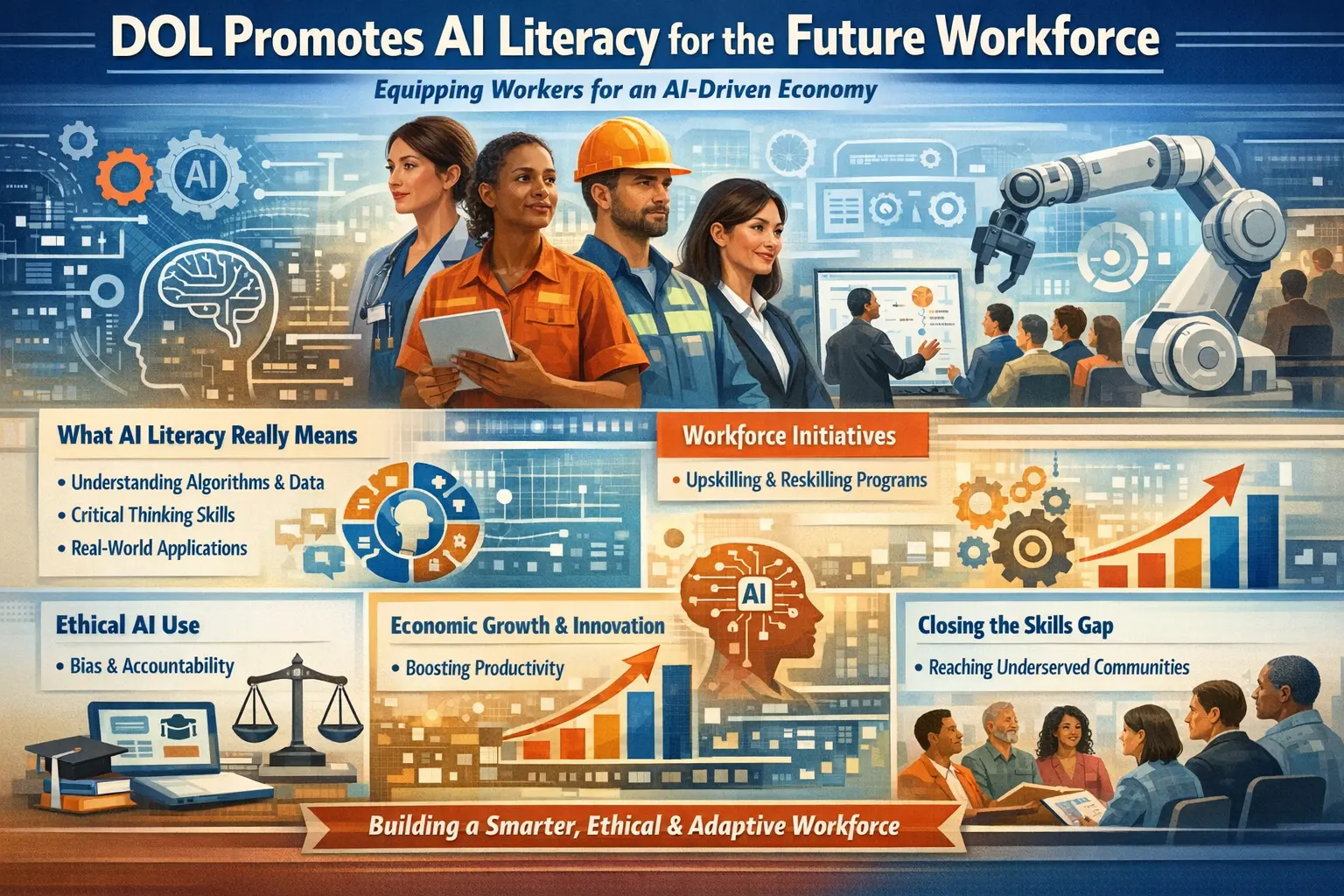
Today we are talking about how dol promotes ai literacy, Artificial Intelligence is rapidly affecting how industries run, how decisions are made, and how individuals work. From automation to predictive analytics, AI tools are being thoroughly interwoven into routine professional operations. In response to this transformation, dol promotes ai literacy to guarantee workers are equipped with the information needed to flourish in an AI-driven economy. AI literacy helps users to understand, question, and effectively employ intelligent technologies rather than being overwhelmed by them.
What AI Literacy Really Means
Programming and sophisticated technical knowledge are not the only aspects of AI literacy. It entails comprehending how algorithms affect results, how data is handled, and how AI systems operate. Dol emphasizes awareness, critical thinking, and real-world application when promoting AI literacy.
An AI-literate workforce can better evaluate automated technologies, spot potential bias, and interact constructively with AI systems. In industries like healthcare, manufacturing, banking, and customer service, these abilities are becoming crucial.
How Dol Promotes AI Literacy Through Workforce Initiatives
The Department of Labor plays a vital role in preparing workers for technological change. As automation reshapes job roles, dol promotes ai literacy through workforce development initiatives that give upskilling and reskilling top priority.
These projects enable workers adapt to AI-enhanced roles instead of being supplanted by technology. By providing training aligned with industry needs, the DOL strengthens workforce resilience and supports long-term employability.
Economic Growth and Innovation
A workforce that understands AI contributes directly to productivity and innovation. When dol promotes ai literacy, it aids businesses in deploying AI responsibly and efficiently. Workers who comprehend AI may enhance workflows, lower errors, and make more informed decisions.
Additionally, as technology advances, workers can transition into newly formed professions thanks to AI literacy. This adaptability is important to sustaining economic growth in a competitive global market.
Education and Training Accessibility
Education is central to building AI literacy. When dol promotes ai literacy, it supports relationships with educational institutions, training providers, and employers to create accessible learning opportunities.
Short-term certifications, online education, and hands-on seminars intended for practical application are frequently included in these programs. The emphasis is on inclusivity, ensuring that persons from various backgrounds can learn AI-related skills without needing advanced technical degrees.
Why Dol Promotes AI Literacy for Ethical AI Use
AI systems increasingly affect employment, performance appraisal, and workplace monitoring. These techniques may inadvertently increase bias or decrease transparency if they are not properly understood. This is why dol encourages ai literacy with a heavy focus on ethics and accountability.
Employers and employees that are knowledgeable about AI are better able to challenge automated choices, guarantee justice, and safeguard privacy. Ethical awareness helps firms develop AI technologies that accord with labor rights and social responsibility.
Closing the Digital Skills Gap
Technology adoption often widens existing inequalities. Many workers lack access to advanced digital training, creating a skills gap. When dol promotes ai literacy, it directly addresses this concern by financing activities that reach marginalized populations.
By broadening access to AI education, the DOL helps ensure that technology growth benefits a greater part of society. This inclusive approach improves the workforce and encourages equitable opportunity.
Long-Term Career Benefits at Dol Promotes AI Literacy
AI literacy is a continuous process rather than a one-time accomplishment. As AI tools continue to grow, workers must regularly upgrade their understanding. Dol encourages lifelong learning and flexibility by promoting AI literacy.
Professionals with AI understanding are better positioned for leadership roles and career success. They are able to foresee shifts, adjust to new tools, and maintain their competitiveness in a labor market that is changing quickly.
Conclusion
Artificial Intelligence will continue to shape the future of work. By investing in education, accessibility, and ethical awareness, dol promotes ai literacy as a cornerstone of workforce competitiveness. These activities assist produce a highly skilled, confident, and adaptive workforce capable of flourishing in an artificial intelligence-powered environment.














Leave a comment