
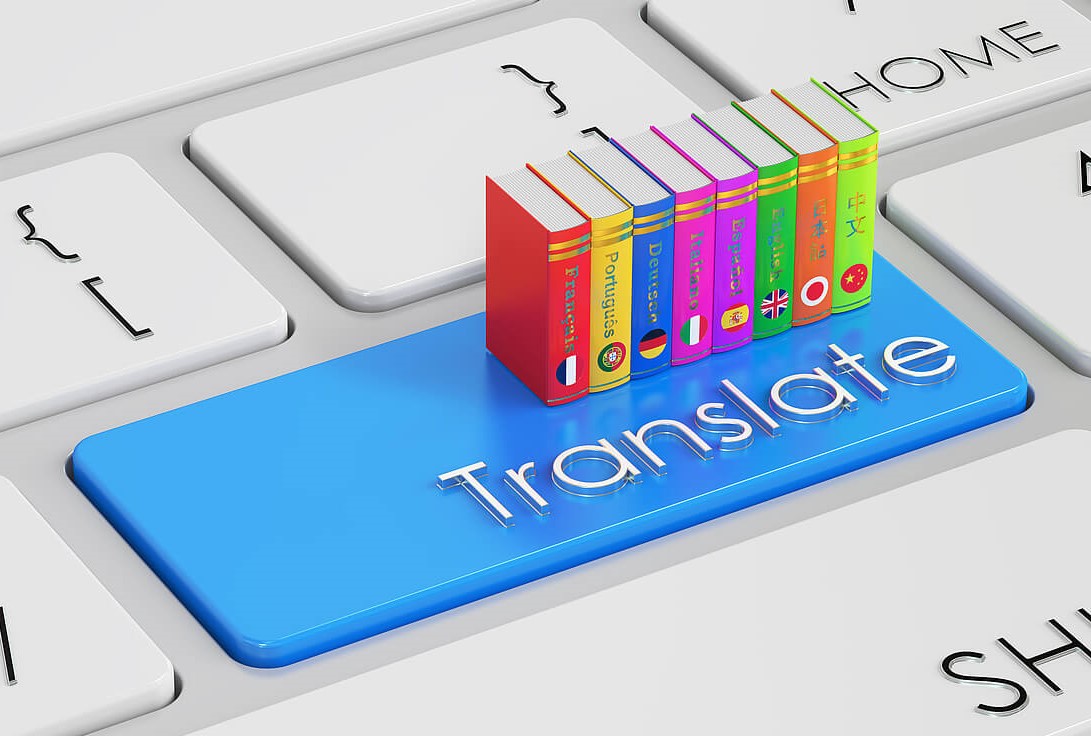
One of the most useful communication tools in today’s digitally connected world is the capacity to тranslate information between languages. Translating text, speech, and meaning is more important than ever, from cross-border corporate transactions to informal social media chats. Businesses and individuals alike depend on translation services to break down language barriers and build stronger cross-border interactions as globalization continues to transform how people communicate.
The notion of translating is no longer restricted to dictionaries or human interpreters employed in official contexts. The industry is now a quick, effective, and widely available service thanks to modern technologies. A website, a contract, a product description, a video subtitle, or even a live conversation can now be translated in a matter of seconds. Even while speed has significantly increased, quality and cultural sensitivity are still crucial.
Fundamentally, translating involves more than just changing one word for another. Tone, meaning, context, and emotional depth are all important. A successful translation process guarantees that the message will organically connect with the intended audience while adhering to the original intent.
We will examine every aspect of translating, including its history, significance, tools, difficulties, trends, and upcoming developments, in this thorough guide. This essay will help you comprehend how тranslate is influencing international communication, regardless of whether you are a business owner, student, content creator, or just interested in language technology.
What Is тranslate and Why Is It Essential?
The process of translating written material, spoken words, or digital content from one language to another while preserving the original meaning is referred to as translation. In the fields of education, business, tourism, entertainment, healthcare, and diplomacy, it is essential.
Effective translation requires more than just vocabulary swapping. Sentence structure, grammar, cultural allusions, idioms, and tone must all be understood during the process. For instance, if used carelessly, a sentence that sounds courteous in one language could come off as impolite or odd in another. For this reason, context and sensitivity are necessary for accurate translation.
The world is bilingual, thus translation is necessary. Every day, billions of people converse in various languages. Global cooperation would be slower, more costly, and less effective without the ability to тranslate. Businesses would find it difficult to grow abroad, students would no longer have access to important resources, and there would be less opportunity for cross-cultural interaction.
Translation is also essential for digital accessibility in the modern day. International audiences are frequently served by websites, applications, e-commerce platforms, and online courses. These platforms can reach more people, increase trust, and improve customer experience with a well-executed translate strategy.
In the end, translation is crucial because it facilitates comprehension. It makes it possible for ideas to overcome cultural boundaries, aids in the expansion of brands into new markets, and offers people the self-assurance they need to interact with one another in a worldwide society.
How Breaks Language Barriers Worldwide
The capacity of тranslate to overcome language barriers is one of its most potent features. Language barriers can limit opportunities, cause confusion, and even make it difficult to understand crucial information. Accurate translation enables communication between individuals who would not otherwise be able to connect.
The ability to тranslate marketing materials, websites, product manuals, and customer service content can result in significant development for firms. International customers find a business more approachable and reliable when it provides localized content in several languages. Customers are much more inclined to purchase from a company that speaks their language.
тranslate facilitates access to global knowledge for researchers and students in the field of education. Innovation and learning can spread more quickly when academic articles, online courses, and technical resources are exchanged between nations. Many important discoveries would remain trapped behind linguistic barriers if translation were not possible.
Translate tools make life easier for migrants and travelers. The ability to translate in real time lowers stress and increases safety when filling out documents, ordering food, asking for assistance, or reading road signs. This has been made particularly easy by mobile apps that provide offline language support, voice translation, and camera translation.
Culturally speaking, translating books, movies, music, and other media from around the globe is beneficial. It makes it possible for narratives to transcend national boundaries and for viewers to encounter concepts outside of their mother tongue.
To put it briefly, translating is one of the best methods to create a more inclusive, cooperative, and open world.
The Evolution of тranslate from Manual Work to Smart Technology
Over time, тranslate voyages has seen significant changes. Scholars, scribes, and interpreters were the only people who translated documents between languages in ancient societies. This type of translation was extremely specialized and frequently restricted to academic, political, or religious texts.
Manual translation was the norm for centuries. Proficient translators acquired proficiency in several languages and frequently dedicated years to learning cultural context. Although their work was intricate and subtle, it was also costly and time-consuming.
A new stage in the history of translation was brought about by the development of computers. Early machine translation systems used rule-based techniques in an effort to automate the process. Simple phrases could be translated by these algorithms, but they frequently had trouble with grammar, tone, and meaning. The outcomes were, at best, practical and occasionally inadvertently funny.
The quality of translations improved dramatically as artificial intelligence developed. Large bilingual text collections were studied using data-driven techniques provided by statistical machine translation. Later, deep learning was used by neural machine translation to predict more natural and context-aware translations, revolutionizing the discipline.
Text, speech, graphics, and even live conversations can all be processed by contemporary translation technologies. AI-powered tools can translate entire documents, websites, and video subtitles in a matter of seconds. Translation is now quicker and easier than ever thanks to these technologies, notwithstanding their flaws.
The development of тranslate is an example of how language technology keeps getting better. Once a laborious manual process, it is now a vital digital service that millions of people utilize on a daily basis.
Top тranslate Tools and Platforms for Modern Users
Many well-known programs are available to assist users in swiftly and effectively translating text. Because each platform offers unique advantages, it’s critical to select the best one for your requirements.
One of the most popular choices is still Google Translate. It enables users to translate speech, text, photos, and webpages into dozens of different languages. It is perfect for daily use, travel, and rapid reference due to its speed and accessibility.
Another well-known platform is DeepL. When translating professional or creative writing, DeepL frequently yields more natural-sounding results, which is why many users prefer it. It is particularly helpful for corporate communication and European languages.
For both people and enterprises, Microsoft Translator provides dependable translation capabilities. It is useful for office papers, presentations, and emails because it integrates seamlessly with Microsoft Office applications.
Amazon тranslate is primarily intended for business use. Businesses use it to translate a lot of content, including product listings, customer reviews, and support tickets.
Plugins and localization tools assist website owners in translating their pages into several languages. These are useful for corporate websites, blogs, and e-commerce sites that wish to attract visitors from abroad.
Professional translators are still required for high-stakes materials like legal contracts, medical documents, and brand message, even if AI systems can translate stuff quickly. In those situations, a hybrid strategy that combines software and human assessment frequently yields the best outcomes.
Your goal, budget, language pair, and accuracy needs all play a role in selecting the best translator.
How to Use тranslate Effectively for Better Accuracy
Effective translation techniques can significantly improve the caliber of your output. A few standard practices can increase accuracy and clarity whether you are using software or a human translation.
First, give context at all times. Depending on the topic, a term can have more than one meaning. The outcome of translating without context may be theoretically accurate but practically incorrect. For instance, industry-specific terminology in the fields of technology, health, and law must be interpreted carefully.
Second, maintain the original text’s clarity and simplicity. It is more difficult to accurately translate text that is unclear, excessively complicated, or full of slang. Better results come from writing that is clear and succinct.
Third, don’t rely too much on literal translation. Meaning is prioritized over word-for-word translation in an effective translation process. Jokes, idioms, and cultural expressions frequently require modification rather than outright replacement.
Fourth, go over and make changes to the result. Even the most sophisticated AI systems can miss tiny tone distinctions or тranslate in an uncomfortable way. Proofreading guarantees that the finished product sounds polished and natural.
Lastly, when the stakes are great, seek professional assistance. Human knowledge is worth the price if you need to тranslate academic papers, contracts, healthcare instructions, or branding materials.
By adhering to these guidelines, you can make sure that translation becomes an instrument for accuracy, confidence, and efficient communication rather than a cause of miscommunication.
Why Businesses Must Invest in тranslate for Global Growth
The capacity to тranslate material is now a strategic requirement for modern enterprises, not a choice. Businesses that wish to grow globally must effectively communicate in several languages with stakeholders, partners, and consumers.
Businesses instantly improve accessibility when they тranslate their websites, product pages, and marketing campaigns. Consumers are much more inclined to interact with companies that offer information in their mother tongue. This enhances user experience, fosters trust, and boosts conversion rates.
Customer service is also supported by an effective translation plan. International users can solve issues more quickly thanks to multilingual FAQs, help centers, and support channels. This can lessen annoyance and increase brand loyalty.
Translation of product descriptions, shipping regulations, and checkout instructions is particularly beneficial for e-commerce firms. Confusion, returns, and lost revenue can result from minor translation errors in these areas.
Internal documentation including employee policies, training materials, and compliance requirements must also be translated by businesses. This is particularly crucial for distant workers and international teams.
Translate facilitates the development of emotional connections for organizations in addition to operations. A generic worldwide message may be outperformed by a specialized campaign that honors linguistic choices and cultural customs. It conveys to consumers that the company respects and understands them.
Businesses that successfully translate are the ones who grow more quickly, forge closer bonds with others, and achieve more long-term success in a cutthroat global market.
How Supports Culture, Media, and Human Connection
тranslate influence goes well beyond technology and business. It is crucial to the global dissemination and preservation of culture. People from various linguistic origins can access literature, films, music, journalism, and educational content through translation.
Readers can encounter concepts, feelings, and customs from many cultures when publishers translate books. Because skilled translators make them accessible to new audiences, some of the finest novels in history have become well-known worldwide.
Subtitles and dubbing assist filmmakers in translating stories for audiences around the world. International material is now more popular than ever because to this transformation of entertainment. Translation services are now a major part of streaming providers’ global distribution of movies and television shows.
Translation skills are equally essential for journalism. When reporting on global events, news organizations use translation to ensure that key stories are comprehensible to a wide range of readers.
On a personal level, translation facilitates the development of cross-border communities, friendships, and connections. Instantaneous translation of posts and comments is a common feature of social media, messaging apps, and online forums. Digital communication becomes more meaningful and inclusive as a result.
Above all, translating promotes empathy. Respect and collaboration are simpler to develop when people are able to comprehend one another’s experiences, beliefs, and viewpoints.
Common тranslate Challenges and How to Overcome Them
There are still difficulties in the process of translating text, even with sophisticated tools. Because language is complicated, there are particular dangers associated with each translation effort.
Ambiguity is one prevalent problem. Depending on the situation, a single word might have multiple meanings. A system may select the incorrect interpretation if it attempts to translate without sufficient information.
Idiomatic language presents another difficulty. Expressions like “hit the ground running” or “break the ice” don’t necessarily тranslate well into other languages. They need to be modified according to regional usage.
Additionally, cultural sensitivity is essential. A message that seems convincing in one culture might not be appropriate in another. Professionals need to understand expectations, humor, tone, and customs in order to тranslate well.
Technical jargon can make things more challenging. Jargon is frequently used in specialized businesses and needs to be handled cautiously. There could be dire repercussions if you translate technical or legal stuff incorrectly.
Whenever possible, combine AI with human knowledge to overcome these obstacles. To ensure uniformity, make use of style guides, glossaries, and translation memory tools. When quality is most important, always have native speakers assess the finished product.
How Insid Business Uses тranslate Insights for Digital Success
At Insid Business, we recognize that communication, visibility, and trust are the cornerstones of the digital world. For companies, marketers, entrepreneurs, and content producers that wish to expand in cutthroat online environments, subjects like translating are crucial.
Insid Business, a platform devoted to educational, useful, and business-oriented material, emphasizes how technologies such as Translate can help with international expansion, audience engagement, global branding, and SEO performance. Knowing how to efficiently translate information can help you reach a wider audience and build stronger relationships, whether you are operating a blog, an online store, or a company.
Insid Business enables readers to make more informed choices in a rapidly evolving online marketplace by examining technological trends, digital tools, and strategic communication techniques. Gaining proficiency with translating is a crucial first step if you want to establish credibility, increase awareness, and engage with audiences across the globe.
The Future of тranslate and What Comes Next
тranslate has a bright and innovative future ahead of it. Translation tools will become even more precise, flexible, and context-aware as artificial intelligence develops.
Multilingual discussions are becoming more natural thanks to the rapid advancement of real-time voice translation technology. Travel, customer service, education, and international cooperation could all change as a result.
Additionally, AI is learning to translate with greater emotional intelligence, identifying tone, style, and intent more accurately. This will be particularly helpful for branding, narrative, and creative writing.
Users may eventually be able to instantaneously translate documents, menus, and signs using smart glasses or mobile devices thanks to augmented reality. In the meanwhile, companies will employ automated technologies more frequently to translate consumer interactions on a large scale.
Human translators will continue to be crucial even as technology develops. The goal of translating in the future is to combine human judgment with computer efficiency to achieve the greatest outcomes, not to replace people.
FAQs
- What does тranslate mean in simple words?
тranslate means converting text, speech, or meaning from one language into another while keeping the original message clear and accurate.
- Is AI тranslate better than human тranslate?
AI can тranslate quickly and is excellent for basic or everyday tasks, but human translators are better for nuanced, creative, legal, medical, and culturally sensitive content.
- Which tool is best to тranslate content online?
Popular options to тranslate online include Google Translate, DeepL, and Microsoft Translator. The best tool depends on your language pair, content type, and required accuracy.
- Can тranslate improve SEO for websites?
Yes, when you тranslate website content for international audiences, it can improve visibility in different regions, increase traffic, and help your site rank in multilingual search results.
- Why is professional тranslate important for businesses?
Professional тranslate helps businesses avoid errors, protect brand reputation, maintain cultural relevance, and communicate clearly with customers in global markets.
Conclusion
The ability to тranslate is more important than ever in a world where global opportunity, innovation, and connectivity are the driving forces. It helps people communicate across borders, empowers businesses to expand into new markets, and makes knowledge, culture, and creativity accessible to everyone.
The contemporary translation ecosystem has solutions for every requirement, from AI-powered technologies to qualified language specialists. Gaining proficiency in translation can lead to amazing chances, whether your goal is to localize a website, comprehend foreign content, enhance customer service, or investigate global prospects.
But technology alone isn’t enough for real success in translating. It calls for clarity, cultural sensitivity, and a dedication to meaning preservation. Translate becomes more than just a linguistic tool when it is used carefully; it becomes a link between individuals, concepts, and opportunities.
Translate will continue to influence global communication as the future develops. Knowing the power of translating is not only beneficial for Insid Business readers, but also necessary to remain relevant in a rapidly evolving digital economy.
Learning to translate is one of the best things you can do if you want to expand internationally, speak with confidence, and reach a larger audience.
Relevant Topics: Understanding тranslate: A Comprehensive Guide and Breaking Down Linguistic Barriers With тranslate
To read more incredible tales in the technology category, click this link












Leave a comment